What if the single most important action you take on a crypto exchange — logging in — is also the moment you expose yourself to most avoidable loss? That sharp question reframes a routine task into a security and behavioral hinge point. For US-based traders using OKX, “okx login” and “okx sign in” are not interchangeable with “safe access”; they are a bundle of design choices, regulatory constraints, and user behaviors that together determine whether your account stays yours or becomes someone else’s problem.
This article unpacks the mechanics of OKX spot trading logins, corrects frequent myths, and gives decision-ready rules you can apply immediately. I’ll explain how OKX’s layered protections work, where they fail in practice, and—crucially—how logging in ties into trading outcomes like slippage, execution risk, and custody trade-offs. The goal: a sharper mental model you can use before you click “okx sign in.”
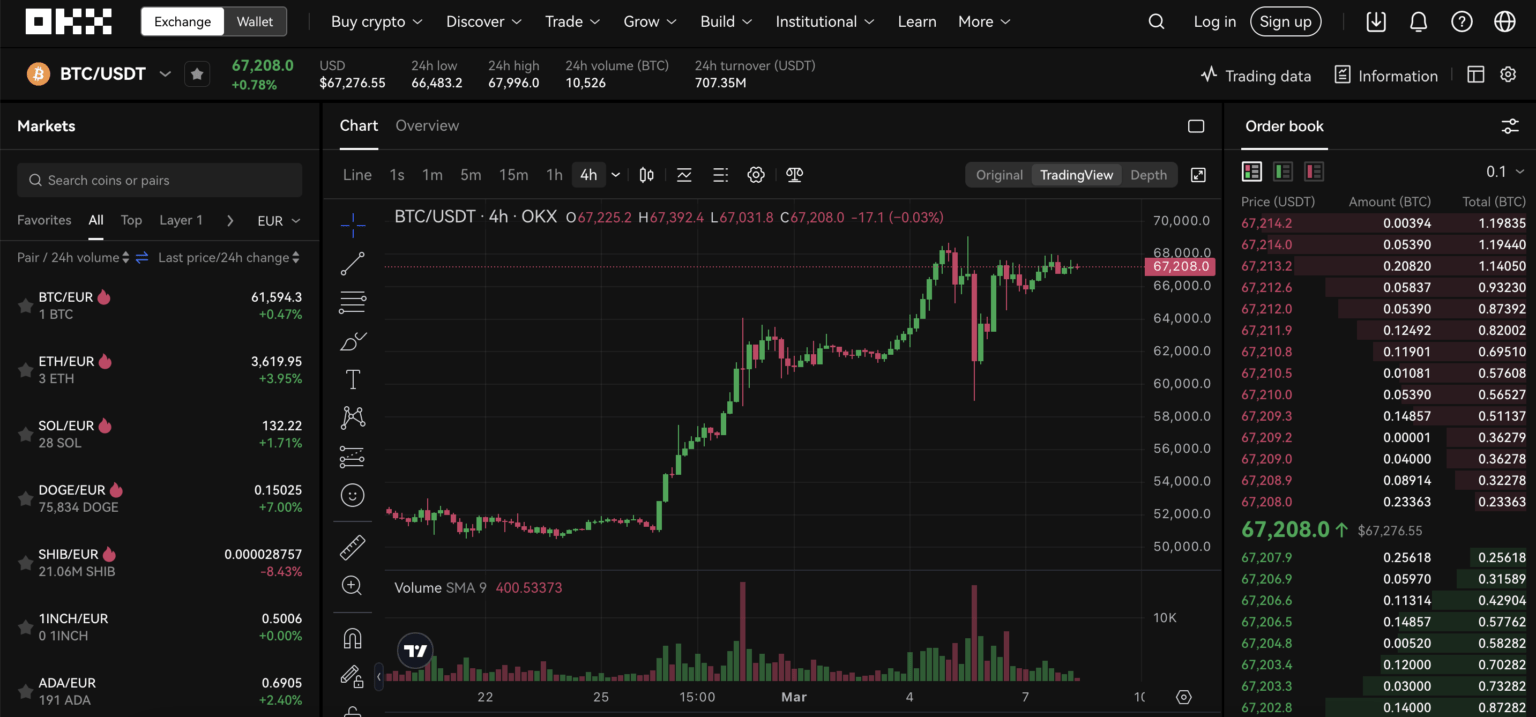
Myth 1 — “If the exchange is secure, my login isn’t a big deal.” Reality: login is the gateway to multiple failure modes
Security features at an exchange level—cold storage, Proof of Reserves, multi-signature withdrawal approvals—are real and meaningful. OKX, for example, stores over 95% of assets in air-gapped cold wallets and offers PoR to demonstrate backing. Those protections reduce systemic custodial risk, but they do not immunize individual accounts.
Why not? Because account-level compromise typically happens before the exchange’s institutional defenses matter. Phishing pages that mimic the OKX login flow, reused passwords, SIM-swapped phone numbers, or compromised 2FA apps give attackers access to the account interface itself. Once an intruder is logged in, they can place spot trades, drain hot-wallet balances, or attempt unverified withdrawals depending on the account’s protections and KYC status. So while exchange-side cold storage protects the pooled reserves, your login is the practical attack surface for direct theft and market-manipulation-style losses (e.g., wash-like trades that increase slippage).
Myth 2 — “KYC and facial checks solve fraud.” Reality: identity verification reduces certain risks but introduces new ones
OKX requires KYC and a liveness facial check to comply with AML rules. That accomplishes two things: it constrains on-boarding for bad actors at scale and permits fiat rails that many US traders need. But it comes with trade-offs. KYC makes account recovery more administratively rigid (lost access may require identity proofs), and biometric checks can’t protect against phishing or social engineering. Moreover, any centralized biometric repository or verification pipeline is a target; while OKX uses industry controls, US users should treat KYC as a form of regulatory gatekeeping rather than an ironclad safety net.
Practical consequence: KYC is necessary for lawful market participation, but it’s not a substitute for operational hygiene. Treat it as one layer in a defense-in-depth strategy—necessary but insufficient.
How OKX’s login architecture works (mechanisms and what they buy you)
At a systems level, OKX offers multiple access routes: web platform with TradingView-grade charts, iOS/Android apps with biometric unlock, and a browser extension for Web3 interactions. Each route changes the threat model.
– Web login: rich UI and powerful charting, but higher exposure to browser phishing and malicious extensions. Use browser isolation, up-to-date patches, and confirm the URL carefully.
– Mobile app: convenient and supports biometrics; less prone to classic phishing but vulnerable to device-level compromise or unauthorized app installs. Keep mobile OS and apps updated and enable device encryption.
– Browser extension (Web3 wallet): essential for DeFi interactions but mixes self-custody risk with exchange access. A compromised extension can leak seed phrases or sign malicious transactions.
OKX enforces mandatory Two-Factor Authentication (2FA) — options include SMS, Google Authenticator, and biometrics. Mechanism-wise, OTP apps are stronger than SMS (SIM-swap attacks exist), and hardware-backed biometrics can be effective when paired with device-level protections. AI-driven login anomaly detection also works as a probabilistic filter: it flags unusual IPs or device fingerprints, but false positives can frustrate legitimate trading during travel or VPN use.
Spot trading implications: why login reliability and timing matter
In spot trading, execution depends on speed and access. A delayed login during volatile moves can turn a planned market order into an unfavorable execution with severe slippage, especially for low-liquidity tokens. Conversely, overly quick, routine logins from insecure contexts increase theft risk. That’s the trade-off traders must manage: availability versus attack surface.
Decision heuristic: maintain a low-friction, high-security path for routine access (e.g., a secured mobile app with a trusted authenticator) while keeping higher-risk operations—withdrawals, large transfers, and cross-chain bridges—behind additional manual checks and hardware wallet confirmations when possible.
Common misconceptions about custody and the OKX Web3 wallet
People conflate OKX’s centralized custody and its non-custodial Web3 wallet. They are different beasts. The exchange-custodial model stores assets under the exchange’s custody (cold storage protections apply), while the OKX Web3 wallet gives you sole control of private keys and seed phrases. That control is empowering but transfers all recovery risk to the user: lose your seed phrase and recovery is typically impossible.
When logging into OKX as a centralized account, you rely on exchange recovery procedures (KYC) and platform security. When using the Web3 wallet or a hardware device (Ledger/Trezor), you rely on the robustness of your personal key management. Each choice has clear trade-offs: convenience and recovery versus absolute control and irreversible loss risk.
If you use both, keep them separated mentally and operationally. Don’t store large self-custodial holdings in the same device/browser profile you use for frequent exchange logins.
Practical checklist before you click “okx sign in” (for US traders)
1) Confirm domain and certificate. Phishing often uses lookalike domains. Check the exact URL and the certificate details on the browser if unsure.
2) Prefer an authenticator app or hardware security key over SMS for 2FA.
3) Use a unique, password-managed credential for OKX—no reuse.
4) Whitelist withdrawal addresses and enable withdrawal confirmations where available.
5) Maintain a small hot balance for trading; keep most assets in cold storage or a hardware wallet.
6) If you trade spot during high volatility, pre-log into a read-only session to confirm connectivity and chart setups, then perform sensitive actions with fresh credentials.
7) For Web3 interactions, keep your seed phrases offline and never paste them into webpages or extensions.
Where this model breaks down — limitations and unresolved issues
Three clear limits deserve attention. First, AI-driven login detection is probabilistic; attackers can sometimes mimic benign signals, and legitimate users can get blocked. Second, proof of reserves verifies aggregate backing but doesn’t address individual-account theft or internal control failures. Third, cross-chain and DEX aggregator functionality expands utility but introduces smart-contract risk: the aggregator finds liquidity routes, but an exploit on a bridged protocol can cause losses irrespective of how you logged in.
These are not hypothetical: they are structural constraints. Good platform practices reduce frequency and scale of incidents but do not eliminate them. Traders should plan for account-level incidents and maintain incident-response habits (e.g., immediate 2FA change, withdrawal address lockdown, and contacting support with KYC ready).
What to watch next (near-term signals that matter)
– Regulatory shifts that tighten KYC or custody standards in the US could change recovery workflows and how quickly accounts can be unlocked or funds moved.
– Improvements in browser and OS security (e.g., wider hardware-backed web authentication) would reduce phishing success rates; monitor support for hardware keys for login.
– Any new OKX announcements about expanded PoR transparency or faster incident response protocols would be relevant; recent platform messaging emphasizes buying BTC and broad crypto access, but operational details matter more than marketing.
If you want a compact walkthrough for the official web route and step-by-step considerations before signing in, this resource covers the practical flow and checklist for US users: okx login.
Frequently asked questions
Q: Is SMS 2FA safe enough for OKX logins?
A: SMS 2FA is better than no 2FA but is weaker than authenticator apps or hardware keys because of SIM-swap and SS7-related attacks. For meaningful account protection—especially for higher balances—use an authenticator app or a hardware security key when possible.
Q: If OKX keeps most funds in cold storage, can my spot balance be stolen after a login breach?
A: Yes. “Most funds in cold storage” refers to pooled reserves. Hot wallets and account-level balances accessible from the UI can be drained if an attacker authenticates to your account. Treat your account login as the primary defensive perimeter for those accessible balances.
Q: Should I use the OKX Web3 wallet or the centralized exchange account for spot trading?
A: Use the centralized exchange account for fiat on-ramps, low-friction spot trading, and features like staking and fiat withdrawals. Use the Web3 wallet when you need self-custody for long-term holdings or to interact directly with DApps. Operationally separate the two: don’t mingle large self-custodial holdings with everyday exchange activity.
Q: What happens if I lose access due to failed KYC or a locked login?
A: Recovery processes generally require re-submitting ID documents and completing liveness checks. That process can be slow and may require additional verification. Preventive steps (secure credentials, secondary recovery options, and documenting your support case information) reduce downtime.
Q: Can logging in through a browser extension expose my seed phrase?
A: Yes—malicious or compromised extensions can capture keystrokes, clipboard content, or injected code that prompts unsafe signature requests. Never enter seed phrases into webpages or extensions; keep seed phrases offline and use hardware wallets for signing when possible.
Final practical takeaway: treat the OKX login as a controlled operational step, not a trivial click. Small habits—unique passwords, non-SMS 2FA, distinct devices or browser profiles for trading vs. casual browsing, and conservative hot-wallet sizing—sharply reduce the most common losses. The platform’s institutional safeguards matter at scale, but your personal login behavior is the decisive variable for day-to-day spot trading security.